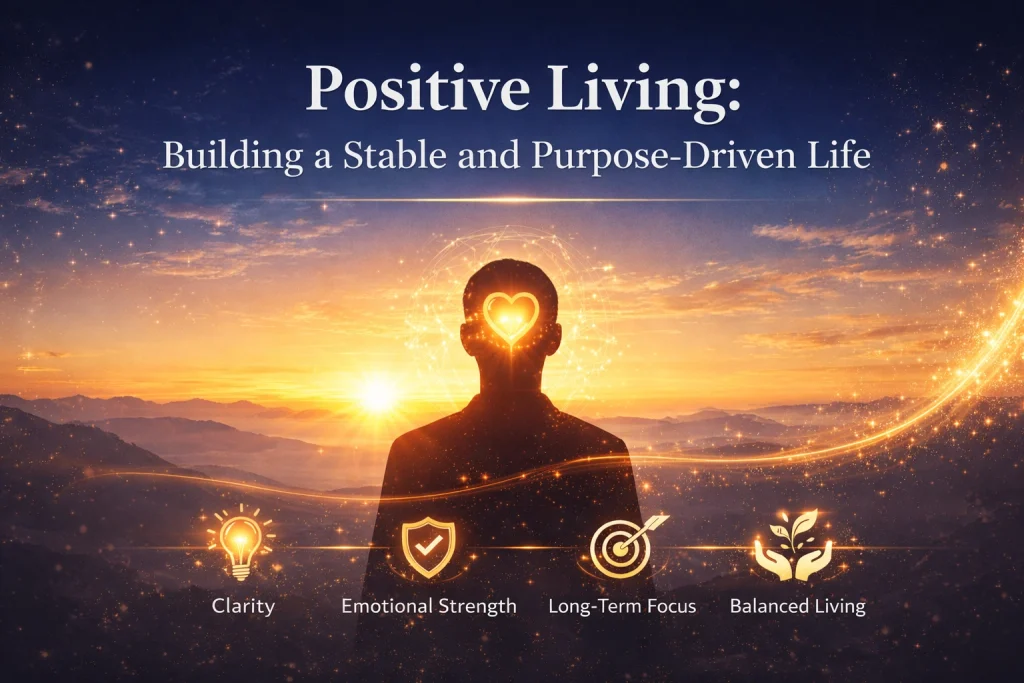
Positive living is not about ignoring difficulties or pretending that everything is perfect. It is about choosing clarity over chaos and discipline over emotional reaction. A positive lifestyle strengthens mental stability, improves relationships, and supports long-term growth.
In a world filled with pressure and uncertainty, developing a positive mindset becomes a strategic advantage. It allows you to move forward with confidence instead of hesitation.
What Positive Living Really Means
Positive living means intentionally shaping your thoughts, habits, and environment. It focuses on responsibility, emotional awareness, and long-term alignment rather than short-term comfort.
Instead of reacting impulsively to situations, positive living encourages thoughtful responses built on self-control and maturity.
Emotional Responsibility
Taking ownership of your mindset is the foundation of positive living. When you control your reactions, you control your direction. This shift strengthens confidence and reduces stress.
Constructive Thinking
Positive living does not deny problems. It focuses on solutions. A constructive mindset identifies opportunities even during challenges and builds resilience through disciplined thinking.
Daily Practices That Support Positive Living
Structured Mornings
A clear morning routine reduces mental clutter. Planning your priorities, organizing tasks, and starting with intention sets the emotional tone for the entire day.
Controlled Environment
Your environment shapes your mindset. Limiting negative content, unnecessary distractions, and unproductive conversations protects your mental clarity.
Consistent Self-Reflection
Reflection helps you evaluate progress and adjust behavior. Small weekly improvements compound into major long-term growth.
The Long-Term Impact of Positive Living
Positive living strengthens decision-making and builds emotional balance. It improves communication, increases focus, and supports sustainable motivation.
Professionally, individuals who practice positive living remain composed under pressure and think strategically rather than react emotionally.
Personally, it creates inner peace, clarity, and purpose.
Conclusion
Positive living is a continuous commitment. It requires discipline, awareness, and consistency. When practiced daily, it builds a balanced, confident, and purpose-driven life that supports both personal fulfillment and professional success.